
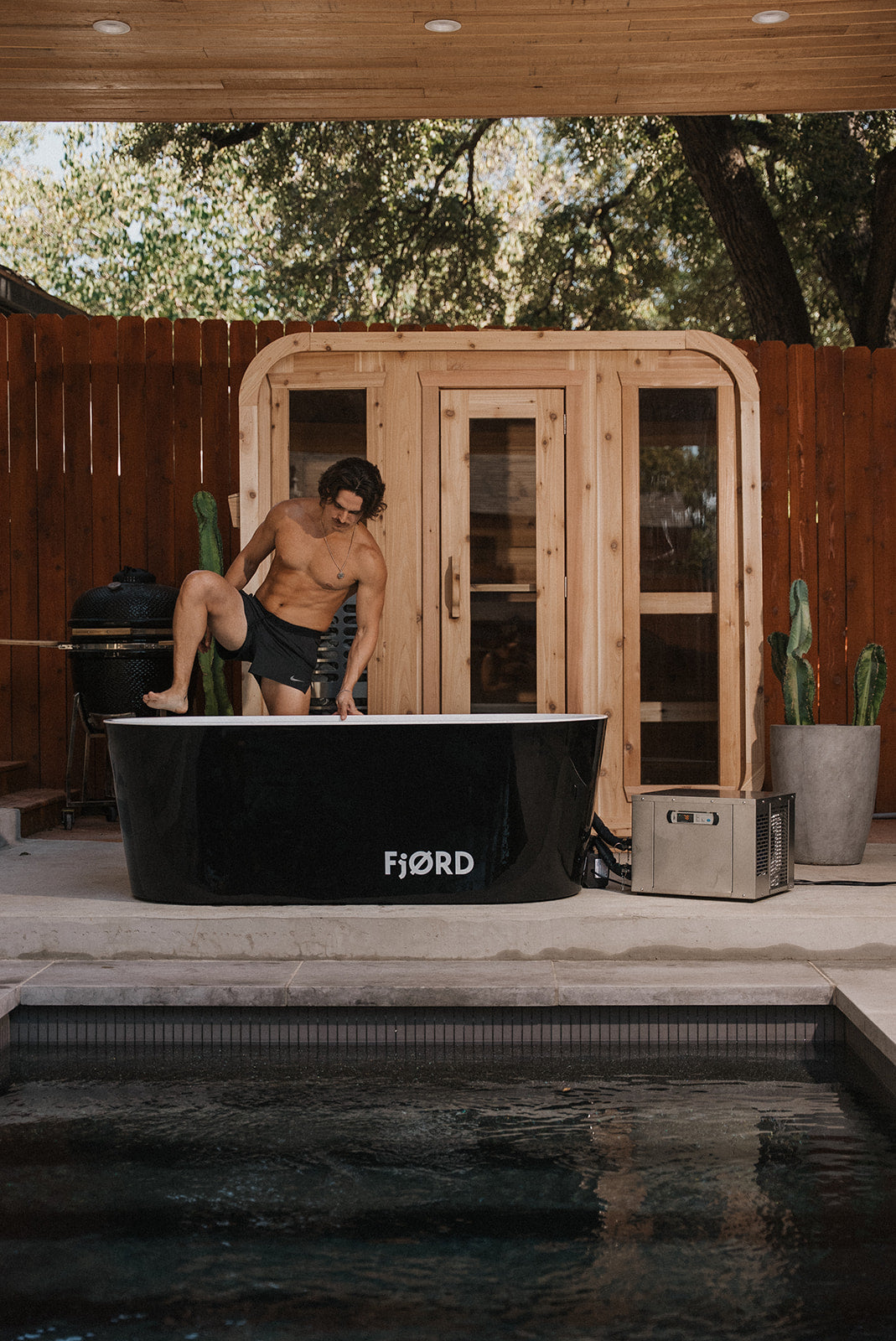
Introduction: What Is Contrast Therapy and Why Are Americans Turning to It in 2025?
Contrast therapy—deliberately alternating between heat (e.g., sauna or hot bath) and cold (e.g., cold plunge tub)—is increasingly popular among U.S. wellness consumers seeking evidence-based recovery strategies. In 2025, demand has been driven by scientific research and readily available at-home solutions that make precision-controlled protocols accessible beyond elite clinical settings.
How Contrast Therapy Works: Current Scientific Understanding
Contrast therapy leverages human thermoregulatory mechanisms: heat induces vasodilation (expansion of blood vessels) and cold triggers vasoconstriction. Alternating these states creates a “vascular pumping” effect that may enhance circulation and improve the clearance of metabolic waste products, while supporting inflammation control and pain modulation 1, 2. Neurophysiological studies indicate this modality can reduce nerve conduction velocity and stimulate endorphin release, offering both immediate and delayed relief for musculoskeletal discomfort 1.
A 2025 scoping review found that contrast therapy, compared to passive rest or single-modality treatments, leads to reductions in pain (measured by visual analogue scale), improvements in joint range-of-motion, and functional recovery across various musculoskeletal conditions. However, authors emphasize heterogeneity in study protocols and call for further standardization to strengthen the evidence base 1.
Key Benefits: Recovery, Inflammation, Circulation, and Mood
Athletic Recovery and Muscle Soreness
Systematic reviews cite moderate-quality evidence that contrast water therapy reduces delayed onset muscle soreness (DOMS) and accelerates recovery of muscle function following intensive exercise. For example, meta-analyses report improvements in both perceived soreness and objective muscle performance post-treatment 1, 3.
Inflammation and Circulatory Health
Recent randomized controlled trials suggest that contrast therapy supports short-term reductions in swelling and pain, especially when implemented in subacute and chronic musculoskeletal conditions 1. Physiological monitoring confirms enhanced blood flow during alternating thermal exposures, which may facilitate tissue repair and waste product clearance 2.
Mood and Stress Modulation
There is early evidence that both cold water immersion and contrast protocols have acute effects on stress and perceived well-being. One systematic review reported a significant reduction in perceived stress 12 hours after cold water immersion 2. However, evidence for long-term mental health benefits remains limited and further research with standardized outcomes is needed 2.
Contrast Therapy vs. Ice Baths: Evidence-Based Comparison
|
Feature |
Contrast Therapy |
Traditional Ice Bath |
|---|---|---|
|
Primary Mechanism |
Alternating vasodilation/constriction (heat/cold) |
Vasoconstriction only (cold exposure) |
|
Main Focus |
Circulation, pain modulation, functional recovery |
Inflammation and reduction in acute soreness |
|
Discomfort Level |
Generally more tolerable |
Higher, especially at lower temperatures |
|
Evidence Base |
Moderate, supported for musculoskeletal recovery |
Strong for acute inflammation/DOMS reduction |
|
Protocol Duration |
15–25 min (cycles) |
10–12 min (single session) |
|
Reference Review |
Safety Considerations and Protocol Recommendations
Risks and Contraindications
Published reviews indicate that contrast therapy is generally safe for healthy individuals, but those with cardiovascular, peripheral vascular disease, uncontrolled hypertension, neuropathy, pregnancy, or open wounds should consult a physician before starting 1.
Best-Practice Protocol (Evidence-Informed)
- Heat immersion: 38–43°C (100–110°F) for 3–5 minutes
- Cold immersion: 10–16°C (50–60°F) for 1–3 minutes
- Repeat for 2–4 cycles, ending with cold 1
- Hydrate before and after, and monitor for dizziness or abnormal symptoms
How to Perform Contrast Therapy at Home
Required Equipment
- Temperature-regulated cold plunge tub (e.g., FjØRD Cold Plunge)
- Sauna, hot bath, or hot shower
Stepwise Home Protocol
- Begin with heat immersion for 3–5 minutes.
- Transition to cold immersion (10–16°C) for 1–2 minutes.
- Alternate for at least 3 cycles, finishing with a cold phase.
- Dry off and rest for at least 10 minutes 1.
- Ensure proper hydration throughout.
FjØRD Cold Plunge: Precision, Expertise, and Consumer Safety
FjØRD Cold Plunge products feature advanced temperature control, robust design, and clear scientific protocols for safe at-home or facility-based contrast therapy. Integrating practitioner-reviewed instructions and expert Q&A, FjØRD supports American wellness goals in 2025 by aligning closely with clinical research recommendations.
Contrast Therapy in Wellness Facilities
Leading U.S. centers utilize integrated cold plunge systems and heated environments, guided by staff familiar with current evidence. Facilities often provide biometric monitoring, cycle recommendations, and supervised group sessions, ensuring adherence to best practices described in recent reviews 1.
Who Should Use—or Avoid—Contrast Therapy?
Recommended:
- Athletes and fitness-minded individuals seeking non-pharmacological musculoskeletal recovery
- Those with chronic pain or mild inflammation (following physician guidance)
Use with Caution or Avoid:
- Cardiovascular or neurological disorders
- Pregnancy
-
Open wounds or skin infection
1
Real-World Outcomes: Consumer and Practitioner Experience
Randomized trials and patient-reported outcomes indicate that many users experience improved recovery times, less soreness, and a perceived enhancement in motivation when contrast therapy is performed with accurate protocols 1. Individual outcomes vary and continued research is warranted to support these findings.
Frequently Asked Questions: Evidence-Based Answers
Q: What is contrast therapy, and what does science say about its effects on recovery?
A: Contrast therapy alternates heat and cold immersion, promoting improved blood flow, pain modulation, and functional recovery. Evidence from randomized controlled trials demonstrates significant benefits for musculoskeletal pain reduction and functional improvement 1.
Q: Is home contrast therapy safe and effective?
A: When using temperature-controlled equipment and following clinical guidelines, home-based contrast therapy is considered safe for most healthy adults. Adherence to recommended temperatures and session durations is essential 1.
Q: How does contrast therapy compare to ice baths alone?
A: Ice baths alone are highly effective for reducing acute muscle soreness and inflammation post-exercise. Contrast therapy offers additional benefits in vascular function and overall recovery by integrating alternating cycles, but the magnitude and consistency of these effects require further study 2, 3.
Resources & References
- Leonardi G, Portaro S, Milardi D, et al. (2025). Mechanisms and Efficacy of Contrast Therapy for Musculoskeletal Painful Disease: A Scoping Review. Journal of Clinical Medicine, 14(5), 1441.
- Cain T, Brinsley J, Bennett H, et al. (2025). Effects of cold-water immersion on health and wellbeing: A systematic review and meta-analysis. PLoS ONE 20(1): e0317615.
- Hing W, White S, Bouaaphone A, Lee P. (2008). Contrast therapy—A systematic review. Physical Therapy in Sport, 9(3): 148-161.


From Bootstrapping DIY Cold Plunges to RunningMan’s Preferred Sponsor
How Cold Should an Ice Bath Be?