
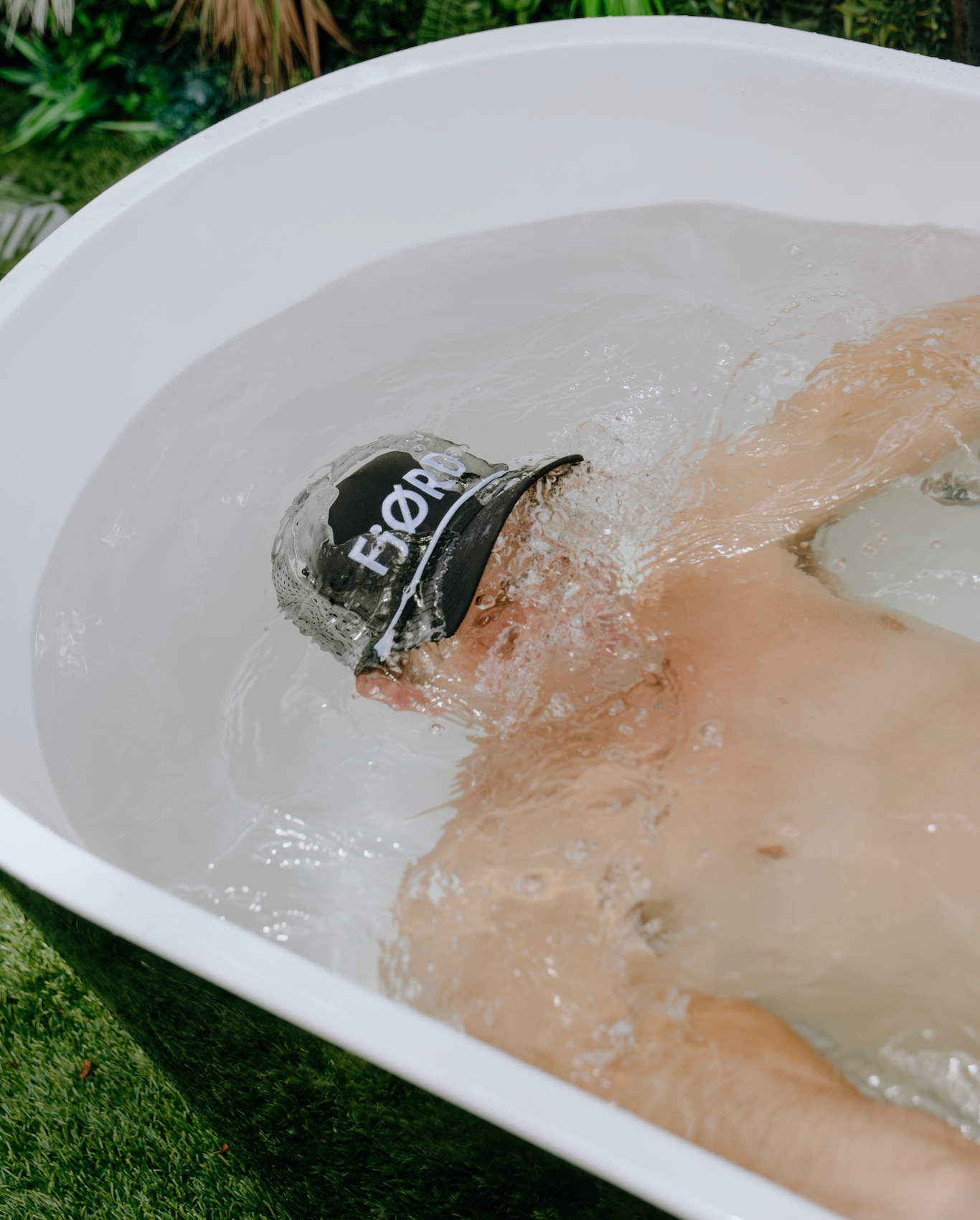
Cold plunges are everywhere in 2025: pro locker rooms, boutique recovery studios, and backyard setups from Austin to Seattle. But the question that actually matters for results and safety is simple: How cold should your ice bath really be?
This guide breaks down the science, safety, and practical protocols so you can dial in your temperature for recovery, performance, and mental resilience—without wrecking your gains or risking your health.
Quick Answer: Ideal Ice Bath Temperature
Most research and medical guidance in 2024–2025 defines cold water immersion as 50 to 59°F (10 to 15°C) for general health and wellness, with shorter, carefully monitored exposures sometimes going colder for advanced users.
A major 2025 systematic review of cold water immersion in healthy adults used ≤15°C (≤59°F) for at least 30 seconds and found time-dependent effects on inflammation, stress, sleep, and quality of life.[1] Sports medicine guidance for post-workout plunges often recommends water around 50°F or slightly colder, with sessions starting at 30–60 seconds and building to 5–10 minutes for adapted users.[2]
For most U.S. adults in 2025, a practical target is:
- Beginner / General Wellness: 54–59°F (12–15°C)
- Intermediate / Athletic Recovery: 50–54°F (10–12°C)
- Advanced / Highly Adapted: 45–50°F (7–10°C) for very short bouts, with medical clearance
Why Ice Bath Temperature Matters
Temperature is not just a comfort thing. It controls how hard your body has to work. Cold water triggers rapid vasoconstriction in the skin and limbs, a spike in heart rate, breathing, and blood pressure called the cold shock response, and hormonal and nervous system changes that can influence inflammation, stress, and mood.
The American Heart Association notes that sudden cold immersion can sharply increase blood pressure and heart strain, especially in people with underlying cardiovascular disease.[3]
Too warm and you lose much of the physiological stimulus. Too cold and you jump straight into risk territory: arrhythmias, hyperventilation, or in extreme cases, loss of consciousness. Dialing in the temperature is about staying in the "productive stress" zone instead of the "stupid dangerous" zone.
What Research Actually Uses as "Cold Water"
When you see headlines about the benefits of ice baths, they are usually based on structured protocols, not random backyard plunges.
A 2022 Sports Medicine meta-analysis of cold water immersion for exercise recovery included studies using water typically at 10–15°C (50–59°F) and found that CWI can modestly help restore performance between hard efforts.[4]
A 2025 PLOS One meta-analysis of 3,177 participants found that CWI in that same 10–15°C range can temporarily reduce stress and improve sleep quality and perceived quality of life, with effects peaking within about 12 hours and fading later.[1]
So when you ask "How cold should an ice bath be?" the evidence-based answer is: Most of the science is built around ~50–59°F (10–15°C), chest-level immersion, and short exposures.
Recommended Temperature Ranges by Experience Level
Think of ice baths like training blocks. You earn the right to go colder and longer.
1. Beginners and General Wellness
Target: 54–59°F (12–15°C)
This range matches temperatures used in many health and wellbeing studies. It's enough to trigger a stress response and vasoconstriction without overwhelming most healthy adults. The 2025 meta-analysis on CWI suggests that brief exposures in this range can modestly reduce stress and improve perceived quality of life, especially in the first 12 hours after immersion.[1]
2. Intermediate Athletes Focused on Recovery
Target: 50–54°F (10–12°C)
This is the sweet spot many sports medicine practitioners use for post-training immersion. Mayo Clinic Health System guidance notes that cold plunges are often done at 50°F or colder, starting with 30–60 seconds and progressing to up to 5–10 minutes.[2]
A 2022 systematic review in Sports Medicine concluded that cold water immersion in this range can reduce exercise-induced muscle damage and help restore performance between hard sessions, especially for endurance and team sport athletes.[4]
3. Advanced Users and Short, Intense Plunges
Target: 45–50°F (7–10°C)
Only for highly adapted, medically cleared individuals. Some advanced protocols and real-world winter swimmers go even colder, but that is outside typical medical recommendations and significantly increases the risk of cold shock, arrhythmias, and hypothermia.[3][6]
If you go this cold: keep sessions extremely short (30–120 seconds), avoid going alone, and warm up gradually afterward.
How Long Should You Stay In?
Time and temperature trade off. Colder water requires shorter sessions. Mayo Clinic Health System notes that cold plungers typically start with 30 seconds to 1 minute and may gradually build up to 5–10 minutes, emphasizing that longer does not mean better, especially for resistance-trained athletes.[2]
Common, evidence-aligned starting points:
- Beginners at 54–59°F (12–15°C): 30–60 seconds, progress to 2–3 minutes
- Intermediate at 50–54°F (10–12°C): 2–4 minutes, up to a typical max of 10 minutes for adapted users
- Advanced at 45–50°F (7–10°C): 30–120 seconds with close attention to breathing and symptoms
What Benefits Can You Expect at These Temperatures?
You see a lot of claims about cold plunges in 2025. The actual evidence is more measured.
A 2025 PLOS One meta-analysis found that CWI can temporarily reduce stress, modestly improve sleep quality, and slightly improve perceived quality of life. These benefits were time-dependent, often peaking around 12 hours after exposure and fading later.[1]
In sports and recovery contexts, research summarized by Mayo Clinic Health System suggests that cold water immersion can reduce inflammation and soreness after difficult workouts, supporting faster short-term recovery.[2][7]
A 2024 review in GeroScience argues that cold water therapy may support cardiometabolic health, brown fat activation, and healthy aging, but stresses that much of the evidence comes from small interventional and cohort studies.[8]
Bottom line: The 50–59°F range used in most studies is enough to produce a real stimulus. Benefits are modest, time-limited, and not a magic bullet. How you integrate ice baths into your training matters as much as the temperature.
When an Ice Bath Might Hurt Your Gains
If your primary goal is maximum muscle growth, timing and temperature matter a lot.
A 2025 Washington Post summary of recent exercise science highlighted work from Maastricht University and others showing that ice baths immediately after resistance training can reduce blood flow and blunt the molecular signals needed for hypertrophy, leading to smaller and weaker muscles over time.[9]
Mayo Clinic Health System echoes this caution, noting that frequent post-lifting plunges may "turn down the molecular signaling pathways" that support strength and muscle gains.[2]
If you care about hypertrophy: Avoid ice baths for at least several hours after heavy lifting. Use them on rest days, endurance-focused days, or in separate sessions.
Safety: Who Should Be Extra Careful?
Sudden immersion in cold water is a serious cardiovascular stressor, not just a trendy wellness hack.
The American Heart Association warns that cold shock can cause rapid spikes in heart rate and blood pressure, involuntary gasping or hyperventilation, and increased risk of arrhythmias in people with heart disease.[3][10]
You should talk to a doctor before cold plunging if you have:
- Heart disease or a history of arrhythmias
- Uncontrolled high blood pressure
- Advanced diabetes with impaired circulation
- Raynaud's, severe asthma, or significant respiratory issues
- Neurological conditions affecting sensation or regulation
For healthy adults, expert guidance emphasizes gradual acclimation, avoiding very long exposures, and staying in the 50–59°F range at first.[6][11]
Step-by-Step: Safe Home Ice Bath Protocol
Whether you are using a FjØRD tub or a basic stock tank, you can follow this framework.
Step 1: Set the Temperature
Start with 54–59°F (12–15°C) if you are new. Use a thermometer, not guessing. If you are using a controlled system like a FjØRD Cold Plunge, keep it locked in a narrow band (for example 52–55°F) so your body learns what to expect.
Most research-aligned health benefits have been studied in this "moderate cold" range rather than at extreme temperatures.[1]
Step 2: Control Your Entry and Breathing
Sit on the edge, lower in slowly to chest level. Expect 30–60 seconds of "shocky" breathing. Focus on slow nasal inhales and long exhales to bring your nervous system under control.
Guidance from sports medicine and wellness experts consistently emphasizes breath control and short, repeated exposures over forcing yourself to suffer in very cold water.[2][6]
Step 3: Time Your Session
Set a timer for 1–2 minutes for your first week. If you adapt well, slowly build to 3–5 minutes in the same temperature range. Use contrast with a warm shower or heated room afterwards, but avoid jumping into scalding heat immediately if you feel light-headed.
Consistency (several times per week) at moderate temperatures is likely more impactful than rarely doing extreme plunges.[1][8]
FAQs: Ice Bath Temperature in 2025
What is the best ice bath temperature for recovery after running or sports?
For most runners and field sport athletes, 50–54°F (10–12°C) for 3–10 minutes after very hard sessions is a common, research-aligned range. Recovery studies and sports medicine reviews typically use 10–15°C water for cold water immersion protocols.[4][2]
Is colder always better?
No. A 2024 GeroScience review on cold water therapy suggests that short-term exposure and lower temperatures may be more potent, but also highlights that optimal dosing is unknown and that excessive cold increases risk without clear added benefit.[8]
For most people, staying in the 50–59°F range and focusing on consistency is smarter than chasing extremely cold, unsafe plunges.
Are cold showers a safer starting point?
Yes. Cold showers are easier to control, less intense than full immersion, and generally safer for people testing their tolerance. Recent coverage in Time points out that cold showers around 50–60°F for 1–3 minutes can provide some of the alertness and stress-tolerance benefits without the higher risk profile of full ice baths.[11]
Can ice baths really help my long-term health?
Maybe, but the science is still early. The 2025 PLOS One meta-analysis and a 2024 GeroScience review both suggest that cold water therapy may support stress resilience, sleep, cardiometabolic factors, and potentially healthy aging, but emphasize that current evidence comes from limited, small studies and that more large, long-term trials are needed.[1][8]
Treat ice baths as one tool, not a cure-all.
Why do some experts warn against cold plunges?
Because the cold shock response is real. The American Heart Association and other experts warn that sudden immersion in very cold water can trigger dangerous spikes in heart rate and blood pressure and can cause drowning if you gasp underwater, especially in open water or unsupervised settings.[3][10]
Controlled, measured plunges in a stable tub at 50–59°F, with someone nearby and a clear time limit, are very different from jumping alone into an icy lake.
References
- Cain T et al. Effects of cold-water immersion on health and wellbeing: A systematic review and meta-analysis. PLOS One, 2025. Link
- Mayo Clinic Health System. Can taking a cold plunge after your workout be beneficial? 2024. Link
- American Heart Association. You're not a polar bear: The plunge into cold water comes with risks. 2022. Link
- Moore E et al. Impact of cold-water immersion compared with passive recovery following a single bout of strenuous exercise on athletic performance in physically active participants. Sports Medicine, 2022. Link
- Frontiers in Physiology. Impact of different doses of cold water immersion on recovery from acute exercise-induced muscle damage: a network meta-analysis. 2025. Link
- Healthline. Are cold plunges really good for you? 2024. Link
- Cleveland Clinic. The benefits and dangers of cold plunges. 2024. Link
- Kunutsor SK et al. The untapped potential of cold water therapy as part of a lifestyle intervention for promoting healthy aging. GeroScience, 2024. Link
- Washington Post. Are cold plunges good for you? Here's what the science says. 2025. Link
- Mayo Clinic Press. Cold plunge benefits: The science behind ice baths for recovery. 2024. Link
- Time. Is taking a cold shower good for you? 2025. Link


The Ultimate Guide to Contrast Therapy in 2025: Science, Protocols, and U.S. Wellness Solutions
Cold Plunge for Weight Loss: Can Ice Baths Help You Burn Fat?