
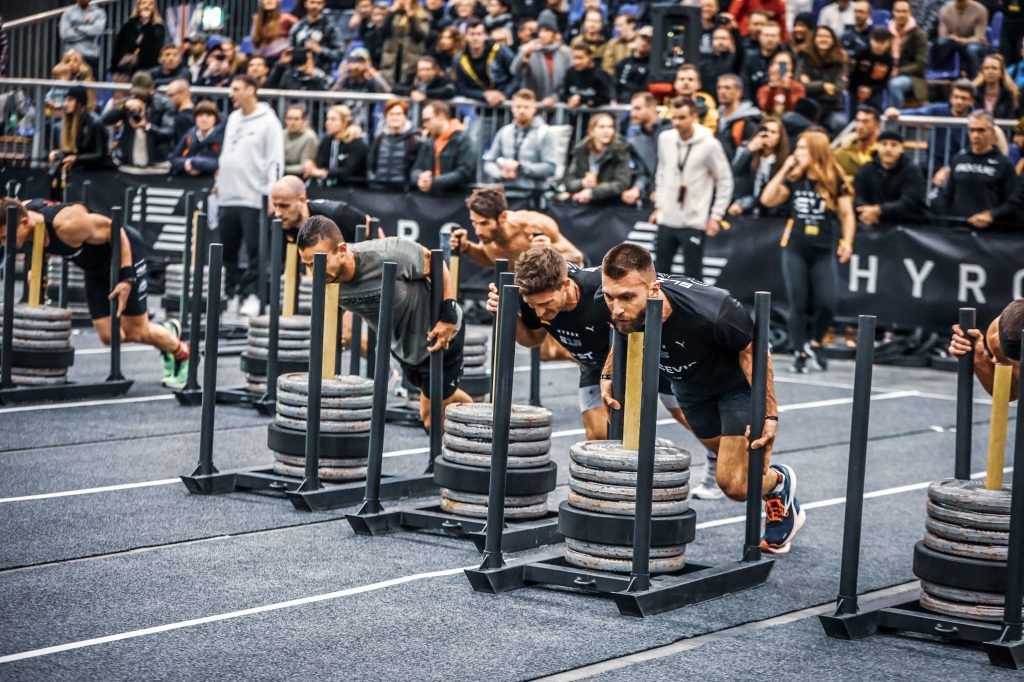
HYROX demands everything: endurance, strength, grip, lungs, and mental toughness. The athletes who improve fastest are not the ones who train the hardest. They are the ones who recover the smartest.
Cold water immersion (CWI) reduces delayed-onset muscle soreness, lowers markers of exercise-induced muscle damage, and accelerates the body's return to training readiness after high-intensity mixed-modal workouts. A 2025 network meta-analysis published in Frontiers in Physiology reviewed 55 randomized controlled trials and found that cold water immersion at 11 to 15 degrees Celsius for 10 to 15 minutes significantly reduced both muscle soreness and creatine kinase (a key biomarker of muscle damage) after exercise. For HYROX athletes and hybrid competitors who train four to six days per week, that faster recovery is not a luxury. It is the difference between showing up ready on Tuesday or dragging through Thursday still sore from the weekend.
Why HYROX and Hybrid Training Create Unique Recovery Demands
HYROX is not a standard endurance race. It is not a standard strength workout. It is a standardized hybrid competition consisting of eight 1-kilometer runs, each followed by a functional exercise station: SkiErg, sled push, sled pull, burpee broad jumps, rowing, farmer's carry, sandbag lunges, and wall balls. The entire event takes most competitors between 75 and 100 minutes of sustained, high-intensity output.
A 2025 scoping review published in PMC on high-intensity functional training in hybrid competitions confirmed that HYROX places predominantly aerobic demands on the body while simultaneously requiring repeated bouts of high-force output. The review noted that accumulated fatigue during the race increases injury risk and that structured recovery strategies are essential for maximizing performance while preserving athlete safety.
This combination creates a recovery problem that neither pure endurance athletes nor pure strength athletes typically face. After a HYROX race or simulation, your legs are inflamed from 8km of running and heavy sled work. Your grip is wrecked from farmer's carries and rows. Your shoulders are fatigued from wall balls and SkiErg. And your central nervous system has been under sustained stress for over an hour. That is a lot of damage across a lot of systems, and it all needs to recover before you can train at full intensity again.
As elite HYROX athlete Cole Learn put it in a Men's Journal interview: recovery is not an afterthought for hybrid competitors. He structures his entire schedule around it. Without adequate recovery, everything else falls apart.
What Cold Water Immersion Does for Post-Workout Recovery
The physiological mechanisms behind cold water immersion are well documented and directly relevant to the type of damage HYROX and hybrid training produce.
Reduces Muscle Soreness (DOMS)
Delayed-onset muscle soreness (DOMS) is the most common barrier to training consistency for hybrid athletes. It typically peaks 24 to 48 hours after a tough session and can limit range of motion, power output, and willingness to train. A meta-analysis of 20 RCTs published in Frontiers in Physiology found that cold water immersion performed immediately after exercise significantly reduced DOMS and perceived exertion. This is especially relevant after HYROX-style sessions that combine eccentric loading (lunges, broad jumps) with high-volume running.
Lowers Markers of Muscle Damage
Creatine kinase (CK) is a biomarker that rises when muscle fibers are damaged. Elevated CK levels indicate your muscles are still in repair mode and not ready for high-intensity work. The 2025 Frontiers in Physiology network meta-analysis found that both low-temperature (5 to 10 degrees Celsius) and medium-temperature (11 to 15 degrees Celsius) immersions for 10 to 15 minutes significantly reduced CK levels post-exercise. Lower CK means less residual damage, which means your body is ready to absorb training stimulus again sooner.
Reduces Systemic Inflammation
Cold immersion constricts blood vessels and reduces blood flow to inflamed tissue, which helps limit the inflammatory cascade that follows intense exercise. The Mayo Clinic Health System reports that cold water immersion reduces the degree of exercise-induced muscle damage after physically challenging activities, with less damage leading to less inflammation, reduced soreness, and faster restoration of physical performance.
Activates the Parasympathetic Nervous System
After the initial cold shock, cold water immersion activates the parasympathetic (rest and recover) branch of the nervous system. A 2024 review in the Journal of Thermal Biology covering 24 studies found that cold exposure enhances parasympathetic activity and improves heart rate variability (HRV). For hybrid athletes who tax both the aerobic and anaerobic systems in a single session, this nervous system downregulation is critical for shifting the body out of a stress state and into recovery mode.
Triggers Dopamine and Norepinephrine Release
Cold water immersion is one of the most potent natural triggers for dopamine and norepinephrine release. A foundational study by Sramek et al. (2000), published in the European Journal of Applied Physiology, found that immersion in 14-degree Celsius water increased plasma norepinephrine by 530% and dopamine by 250%. These neurotransmitters play a direct role in mood, focus, motivation, and perceived energy. For athletes managing high training volumes, that neurochemical boost can be the difference between a productive recovery day and a flat, unmotivated one.
When to Cold Plunge: Timing Matters for Hybrid Athletes
Timing is one of the most important (and most misunderstood) variables in cold water immersion for athletes. According to Dr. Andrew Huberman of the Huberman Lab, cold water immersion can limit some gains in hypertrophy and strength if done within four hours after resistance training. The reason: the inflammatory response that cold suppresses is actually part of the signaling cascade your muscles need to grow.
This does not mean cold plunging is bad for HYROX athletes. It means you need to be strategic about when you use it. Here is a practical framework for hybrid training:
After HYROX Simulations and Race Day
Plunge within 30 minutes. You are not trying to build muscle during a simulation or race. You are trying to recover as fast as possible so you can resume quality training. Cold immersion is ideal here.
After Endurance-Only Sessions (Runs, Rows, SkiErg)
Plunge when convenient. Research suggests that cold water immersion does not negatively affect endurance training adaptations the way it can interfere with strength gains. After a long run or compromised run, a cold plunge can reduce soreness and help you bounce back for the next session.
After Heavy Strength or Hypertrophy Sessions
Wait six to eight hours, or save the plunge for the next morning. If your primary goal in that session was to build strength or muscle, give your body time to complete the inflammatory signaling process before applying cold.
On Rest Days and Active Recovery Days
Plunge anytime. Rest-day cold plunges are excellent for reducing accumulated systemic inflammation, boosting mood and focus, and maintaining the consistency of your cold exposure practice without interfering with any training adaptations.
Recommended Cold Plunge Protocol for HYROX Athletes
The 2025 Frontiers in Physiology meta-analysis found that the most effective protocol for reducing both soreness and muscle damage biomarkers was 10 to 15 minutes of immersion at 11 to 15 degrees Celsius (roughly 52 to 59 degrees Fahrenheit). However, shorter immersions at colder temperatures (5 to 10 degrees Celsius) were also effective, particularly for improving power output (countermovement jump performance).
Here is a practical starting point for HYROX and hybrid athletes:
|
Variable |
Recommendation |
|
Temperature |
50 to 59°F (10 to 15°C) for recovery. 38 to 50°F (3 to 10°C) for advanced practitioners. |
|
Duration |
3 to 5 minutes per session. Work up from 1 to 2 minutes if you are new to cold exposure. |
|
Frequency |
2 to 4 sessions per week. Target roughly 11 minutes of total weekly cold exposure (per Huberman Lab protocol). |
|
Immersion Depth |
Chest-level or full body (neck-deep) for maximum benefit. Partial immersion reduces effectiveness. |
|
Post-Simulation / Race |
Within 30 minutes. 3 to 10 minutes at 50 to 59°F. |
|
Post-Strength Session |
Wait 6 to 8 hours, or save for the following morning. |
|
Post-Endurance Session |
Anytime. No interference with aerobic adaptations. |
|
Rest / Active Recovery Day |
Anytime. Ideal for systemic recovery and mood. |
What Cold Plunging Cannot Do (And What to Pair It With)
Cold water immersion is a powerful recovery tool, but it is not a silver bullet. It does not replace sleep, nutrition, or intelligent programming. Here is what the research supports as a comprehensive hybrid athlete recovery stack:
-
Sleep: Seven to nine hours per night is the single most important recovery variable. No recovery modality compensates for chronic sleep deprivation.
-
Nutrition: Adequate protein (1.6 to 2.2g per kg of bodyweight), carbohydrate replenishment after glycogen-depleting sessions, and overall caloric sufficiency.
-
Programming: Periodized training that balances volume and intensity across the week. Deload weeks every three to five weeks.
-
Cold water immersion: Strategic use for accelerating recovery between sessions, reducing accumulated soreness, and supporting nervous system downregulation.
-
Active recovery: Light movement, walking, mobility work, and foam rolling on off days to maintain blood flow and range of motion.
When cold plunging slots into this stack correctly, it amplifies everything else. You sleep better because your nervous system is calmer. You train harder because your soreness is managed. You stay consistent because you feel good.
Why a Home Cold Plunge Wins for Serious Hybrid Athletes
HYROX athletes typically train four to six days per week. That means recovery is not a once-in-a-while event. It is a daily practice. And daily practices only stick when they are frictionless.
A home cold plunge eliminates the barriers that prevent consistent use. There is no driving to a gym. No waiting for a shared tub. No guessing whether the water is actually at the right temperature. With a dedicated unit like the FjORD Sport or FjORD Lux, the water is cold and filtered 24/7. You step in, do your three to five minutes, step out, and move on with your day. Total time invested: under 10 minutes, including the walk to your patio.
FjORD tubs are designed for exactly this kind of daily-driver use. They connect to a standard 110 to 120V outlet, require no permanent installation, and feature American-made chillers that cool water down to approximately 36 degrees Fahrenheit. Built-in filtration keeps the water clean between uses. Setup takes 20 to 30 minutes. And they work indoors or outdoors, so you can place one wherever it fits your routine best.
For athletes who are training for a HYROX season, that convenience compounds. Three plunges per week across a 12-week training block is 36 recovery sessions. At a gym, that is 36 round trips, 36 scheduling decisions, and 36 opportunities for life to get in the way. At home, it is 36 times walking out your back door.
Related Reading
[Internal link: Home Cold Plunge vs Gym or Spa: What Fits Your Lifestyle? - fjordcoldplunge.com/blogs/home-cold-plunge-vs-gym-spa]
[Internal link: FjORD Cold Plunge Setup Guide - fjordcoldplunge.com/pages/setup-guide]
[Internal link: Shop FjORD Sport and FjORD Lux - fjordcoldplunge.com/collections/all]
Frequently Asked Questions
Should I cold plunge after HYROX training?
Yes, with a caveat on timing. After HYROX simulations, compromised runs, and race day, cold plunging within 30 minutes is ideal for accelerating recovery. After dedicated strength or hypertrophy sessions, wait six to eight hours to avoid blunting muscle growth signaling. After endurance-only sessions, plunge anytime. (Source: Huberman Lab)
How cold should a cold plunge be for athletic recovery?
Research supports 50 to 59 degrees Fahrenheit (10 to 15 degrees Celsius) for 10 to 15 minutes as the most effective recovery protocol. Shorter immersions at colder temperatures (38 to 50 degrees Fahrenheit) are also effective, particularly for restoring power output. (Source: Frontiers in Physiology, 2025)
How many times per week should a hybrid athlete cold plunge?
Two to four sessions per week, totaling approximately 11 minutes of cold exposure. This aligns with the minimum effective dose outlined by Andrew Huberman and supported by multiple studies. FjORD's chiller systems maintain your target temperature 24/7, making it easy to plunge on schedule without prep time. (Source: UF Health Jacksonville)
Does cold plunging reduce inflammation after exercise?
Yes. Cold water immersion constricts blood vessels and reduces blood flow to inflamed tissues, limiting the inflammatory response. Multiple studies confirm reductions in creatine kinase and delayed-onset muscle soreness within 24 to 48 hours of post-exercise immersion. (Source: Mayo Clinic Health System)
Can cold plunging improve mental focus and motivation for training?
Research shows that cold water immersion increases dopamine by up to 250% and norepinephrine by up to 530%, with effects lasting two hours or more. These neurotransmitters directly influence mood, motivation, alertness, and focus. For athletes managing heavy training blocks, this neurochemical effect can meaningfully improve the quality of recovery days and readiness for the next session. (Source: Sramek et al., European Journal of Applied Physiology)
Is cold plunging safe for athletes?
Cold water immersion is generally considered safe for healthy adults and athletes. Start gradually (warmer temps, shorter durations) and build tolerance over time. Anyone with cardiovascular conditions, high blood pressure, Raynaud's syndrome, or circulatory issues should consult a physician before starting. Never plunge alone in open water. (Source: Harvard Health)
Recover Faster. Train Harder. Race Stronger.
HYROX rewards consistency. You cannot improve your sled push time, your running pace, or your wall ball endurance if you are too sore or too fatigued to train at full intensity three to five days per week. Cold water immersion is one of the most accessible, research-backed tools available for closing the gap between sessions and showing up ready.
If you are serious about your HYROX season and want a recovery tool that is ready when you are, explore the FjORD Sport and FjORD Lux at fjordcoldplunge.com. American made. Plug-and-plunge simple. Designed for athletes who treat recovery like training.
Not sure which model fits your setup? Contact us for a free consultation. We talk to athletes every day and can help you figure out the right placement, temperature protocol, and training integration for your goals.
Sources and External Citations
1. Wang, H., Wang, L., & Pan, Y. (2025). Impact of different doses of cold water immersion on recovery from acute exercise-induced muscle damage: A network meta-analysis. Frontiers in Physiology, 16. https://doi.org/10.3389/fphys.2025.1525726
2. Sramek, P. et al. (2000). Human physiological responses to immersion into water of different temperatures. European Journal of Applied Physiology, 81(5), 436-442. PubMed: 10751106
3. Xiao, F. et al. (2023). Effects of cold water immersion after exercise on fatigue recovery and exercise performance: Meta-analysis. Frontiers in Physiology, 14. PubMed: 36744038
4. Mayo Clinic Health System (2024). Cold-water plunging health benefits. mayoclinichealthsystem.org
5. Harvard Health (2025). Cold plunges: Healthy or harmful for your heart? health.harvard.edu
6. UF Health Jacksonville (2024). The benefits of cold-water immersion therapy. ufhealthjax.org
7. Huberman Lab. The Science & Use of Cold Exposure for Health & Performance. hubermanlab.com
8. High Intensity Functional Training in Hybrid Competitions: A Scoping Review (2025). PMC. PMC12550923
9. Kunutsor, S. K. et al. (2025). The untapped potential of cold water therapy as part of a lifestyle intervention for promoting healthy aging. GeroScience, 47(1), 387-407. PMC11872954
10. PLOS One (2025). Effects of cold-water immersion on health and wellbeing: A systematic review and meta-analysis. doi.org/10.1371/journal.pone.0317615
11. Men's Journal (2025). How an Elite Athlete Trains for HYROX. mensjournal.com
Why You Should Cold Plunge Before Your Workout
Cold Plunge and Breathwork: How to Combine Them for Maximum Benefit