
Most people discover cold therapy as a recovery tool. You finish a hard training session, you are sore, and someone tells you to get in the cold plunge. That is a valid use case. But it is not the only one, and for a lot of athletes and high performers, it is not even the best one.
Pre-workout cold plunging is a different protocol with a different physiological target. Instead of blunting inflammation after training, you are using cold exposure to prime the nervous system before it. The result is sharper focus, greater physical output, and a mental state that many describe as one of the most effective pre-workout tools they have found, without stimulants.
Here is what the research says and how to apply it.
Before vs. After: At a Glance
|
Timing |
Primary Benefit |
Best For |
|
Before workout |
CNS activation, focus, vasodilation |
Performance, mental edge |
|
After workout |
Inflammation reduction, recovery |
Soreness, fatigue |
|
Either / both |
Habit consistency, overall adaptation |
Long-term cold therapy |
What Happens to Your Body When You Cold Plunge Before Training
1. Norepinephrine Spikes
Cold water immersion triggers a significant release of norepinephrine, a neurotransmitter and hormone that drives alertness, focus, and arousal. Studies have recorded increases of 200 to 300 percent following cold exposure. That is a sharper, cleaner mental state than most pre-workout supplements produce, and it arrives without the crash.
For strength training, this matters because central nervous system activation is a key limiter on force output. Walking into a session already aroused and focused tends to translate directly into better lifts.
2. Dopamine Rises and Holds
Cold exposure also produces a sustained dopamine increase of roughly 250 percent that can persist for several hours after the plunge. Unlike caffeine or stimulants, this rise is gradual and long-lasting rather than spiked and followed by a trough. For athletes who train in the morning or midday, this means the motivational and reward circuitry that drives effort in training is running at a higher baseline throughout the session.
3. Core Temperature Priming
There is a counterintuitive thermodynamic argument for pre-workout cold plunging: briefly dropping your core temperature before exercise gives your body more thermal headroom before it needs to start managing heat. Research on pre-cooling and athletic performance shows that athletes who lower core temp before high-intensity work can sustain output longer before heat fatigue sets in. For HYROX athletes, endurance runners, or anyone doing metabolically demanding work in a warm environment, this is a meaningful edge.
4. Vasoconstriction Followed by Vasodilation
Cold exposure initially causes vasoconstriction, blood vessels narrow and blood is directed toward core organs. When you exit the plunge and begin warming up, the rebound vasodilation is significant. Blood rushes back to the periphery, oxygen delivery to muscles increases, and you enter your warm-up in a state of heightened circulation. Many athletes describe feeling an unusual pump and physical readiness within the first ten minutes of training after a cold plunge.
Who Benefits Most From Pre-Workout Cold Plunging
Strength and Power Athletes
The CNS activation argument is strongest here. If you train in a high-intensity, low-rep strength protocol, your performance is heavily dependent on neural drive. A pre-workout plunge that sharpens focus and raises arousal without systemic fatigue can have a direct effect on top-end output.
Early Morning Trainers
Cold exposure in the morning is one of the most researched tools for anchoring circadian rhythm and daytime alertness. If you train at 5 or 6 a.m. and struggle to feel sharp before the session starts, a two-to-three minute plunge before you lift is a more effective and longer-lasting primer than caffeine alone.
High-Volume Endurance Athletes
The pre-cooling effect matters most for athletes doing sustained output in warm conditions. If your sessions run 45 minutes or longer and include significant cardiovascular demand, starting with a lower core temperature can meaningfully delay the point at which heat becomes a performance limiter.
Anyone Who Struggles With Pre-Workout Motivation
The dopamine and norepinephrine response to cold is not specific to athletes. If you regularly battle inertia before training, whether that is a mental resistance to starting or low energy in the afternoon, a short plunge resets the neurochemical baseline in a way that is difficult to replicate through other means.
The Honest Counterargument: Does Cold Before Training Blunt Gains?
This is a legitimate question and worth addressing directly. Some research has raised concerns that cold exposure immediately after resistance training may attenuate hypertrophy by suppressing the inflammatory signaling that drives muscle protein synthesis. The Roberts et al. meta-analysis is the most cited work here, and it is real.
The key distinction is timing. The concern about blunted gains applies specifically to post-workout cold immersion in the immediate window after training, not pre-workout. Plunging before your session does not interfere with post-exercise anabolic signaling because the training stimulus has not yet occurred. You get the neurological priming benefits without touching the recovery and adaptation processes that follow the session.
If hypertrophy is your primary goal, the simplest protocol is: cold plunge before training, wait at least four to six hours after training before any cold exposure if you choose to plunge post-workout as well.
A Simple Pre-Workout Cold Plunge Protocol
-
Temperature: 50 to 59 degrees Fahrenheit (10 to 15 degrees Celsius)
-
Duration: Two to four minutes for most people
-
Timing: Ten to thirty minutes before your warm-up begins
-
Exit protocol: Air dry rather than toweling aggressively, let your body rewarm naturally on the walk to the gym or the warm-up itself
-
Frequency: Three to five times per week aligns with most training schedules
The natural rewarming process after the plunge is part of the protocol. As your body generates heat in response to the cold, you enter your warm-up with rising core temperature, elevated cardiovascular output, and a nervous system that is already running hot. That is an ideal state to begin training.
Why a Home Unit Makes Pre-Workout Plunging Actually Happen
Pre-workout cold plunging only works if you do it consistently. That means the plunge has to be available when you are ready to train, at the right temperature, with zero prep time.
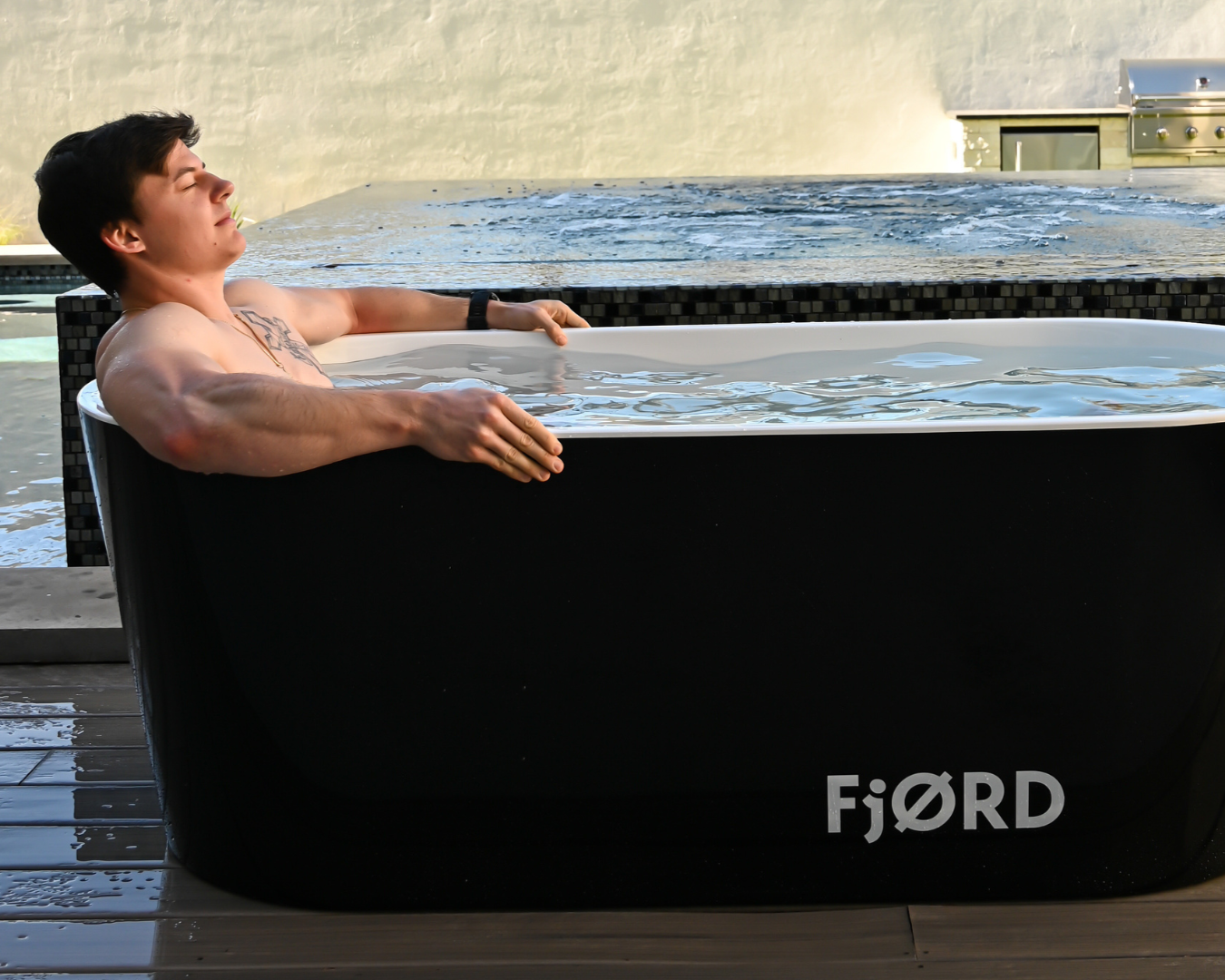
A gym-based plunge requires you to travel before your workout, not after, which most people are not willing to do. A DIY ice bath requires setup and ice procurement, which kills the habit quickly. A FjORD Cold Plunge on your deck or in your garage means you wake up, walk outside, plunge for three minutes, and start your session. The entire pre-workout ritual can take less than twenty minutes from plunge entry to barbell.
Consistency is the variable that makes cold therapy work. A home unit is the infrastructure that makes consistency possible. See how FjORD fits into a performance routine or explore our full lineup of cold plunge units.
Frequently Asked Questions
Is it safe to cold plunge right before a workout?
Yes, for most healthy adults. A two-to-four minute plunge at 50 to 59 degrees Fahrenheit before training is well within the range studied in the research literature. You should complete a proper warm-up after the plunge before loading heavy movements. If you have any cardiovascular conditions, consult your physician before starting a cold exposure protocol.
Will cold plunging before lifting reduce my gains?
No. The concern about cold exposure blunting hypertrophy applies to post-workout immersion in the immediate recovery window, not pre-workout. Plunging before your session does not interfere with the anabolic signaling that occurs after training. For more on this, see the Roberts et al. research on cold and muscle adaptation.
How long before a workout should I cold plunge?
Aim for ten to thirty minutes before your warm-up. This gives you time to exit, begin the natural rewarming process, and enter your warm-up with rising core temperature and active vasodilation. Plunging immediately before lifting without any transition time is not ideal.
Can I cold plunge both before and after a workout?
Yes, many athletes do. The protocol that works well for people prioritizing performance and hypertrophy is: plunge before training, skip the post-workout plunge, or wait at least four to six hours after the session before cold exposure. This preserves the inflammatory signaling that drives muscle protein synthesis while still getting recovery benefits later in the day.
What is the difference between cold plunging before vs. after a workout?
Pre-workout plunging targets neurological priming: norepinephrine and dopamine elevation, CNS activation, and core temperature reduction for thermal headroom. Post-workout plunging targets recovery: inflammation reduction, soreness management, and parasympathetic nervous system activation. Both are valid, and the best choice depends on your training goals and schedule. See our home cold plunge vs. gym comparison for more on building a consistent protocol.
How long should a pre-workout cold plunge be?
Two to four minutes is the practical range for most people at 50 to 59 degrees Fahrenheit. You do not need to push past four minutes to get the neurological priming effect. Huberman Lab protocols suggest accumulating roughly eleven minutes of cold exposure per week across multiple sessions, so a three-minute pre-workout plunge five days a week puts you well within that target.
Does pre-workout cold plunging replace a warm-up?
No. Cold plunging primes the nervous system and mental state but does not replace the joint mobility, tissue temperature elevation, and movement-specific preparation that a proper warm-up provides. Treat the plunge as a neurological primer, then follow it with your normal warm-up routine before loading any movements.
---
References: Rymaszewska et al. (1999), Norepinephrine response to cold | Huberman Lab, deliberate cold exposure protocols | Ross et al. (2013), Pre-cooling and endurance performance | Roberts et al. (2015), Cold water immersion and muscle adaptation | Leproult & Van Cauter (2010), Circadian rhythm and morning alertness


Home Cold Plunge vs. Gym or Spa: What Fits Your Lifestyle?
Cold Water Immersion Is One of the Most Effective Recovery Tools for Hybrid Athletes