
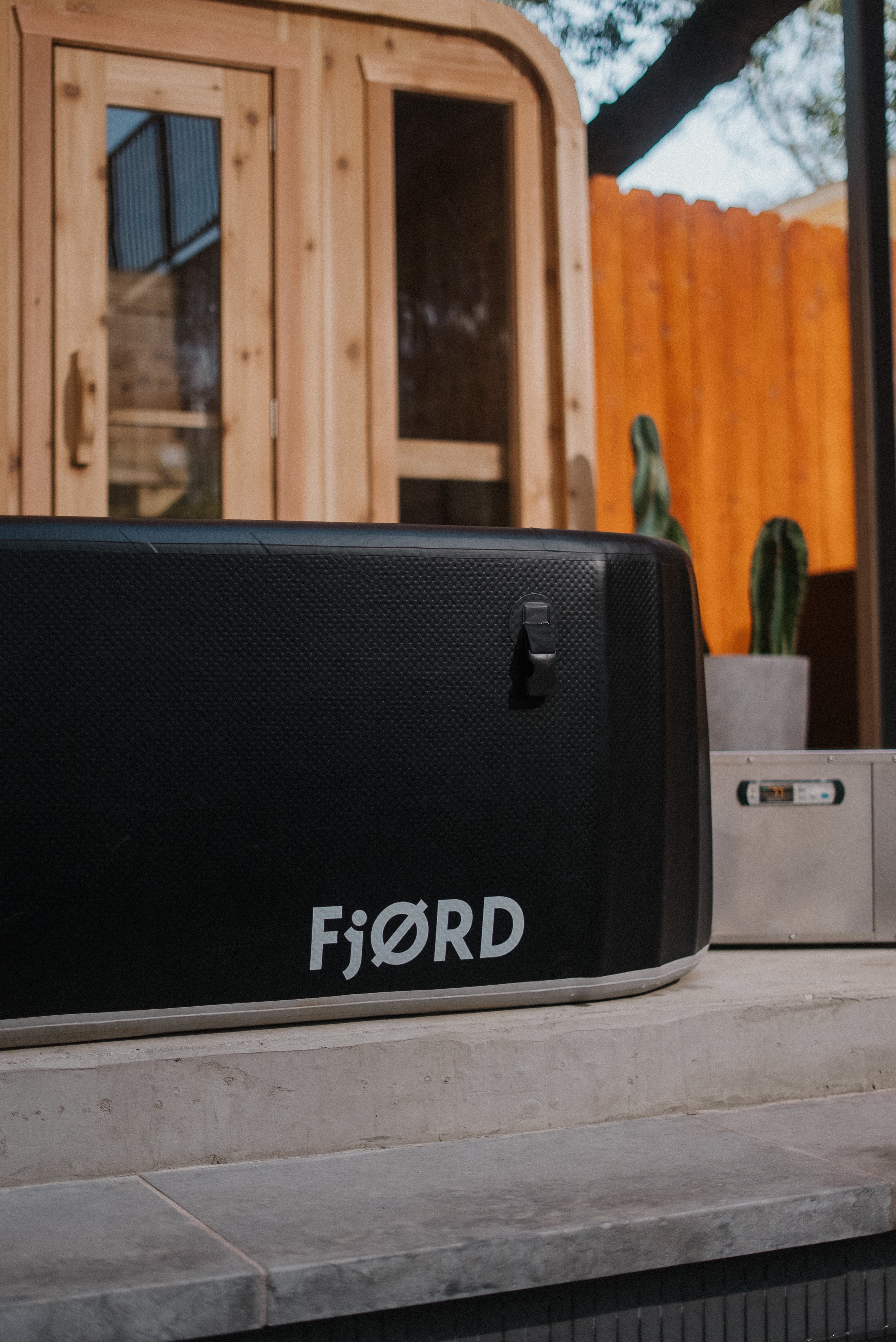
If you have spent any time researching cold therapy, you already know the science behind cold water immersion is compelling. Reduced inflammation, faster muscle recovery, improved mood regulation, and sharper mental clarity are all well-documented benefits. But the question most people skip straight past is not whether cold plunging works. It is where you are actually going to do it, consistently, week after week.
This guide breaks down the three most common options, home cold plunge, gym or spa, and DIY ice bath, so you can make a decision based on your real life, not your best-case-scenario life.
Quick Comparison
|
Home Cold Plunge |
Gym or Spa |
DIY Ice Bath |
|
|
Upfront Cost |
Higher investment |
Low / none |
Minimal |
|
Convenience |
Highest |
Moderate |
Low |
|
Temp Control |
Precise |
Inconsistent |
Very difficult |
|
Hygiene Control |
Full control |
Shared |
Variable |
|
Long-Term Use |
Best |
Good (if nearby) |
Difficult to sustain |
Home Cold Plunge
The Case For It
-
Maximum convenience: your plunge is steps away, not a 20-minute drive
-
Full hygiene control: you own the water chemistry and cleaning schedule
-
Ritual design: build cold exposure into your morning or evening routine without friction
-
Family and household access: everyone benefits from a single investment
-
Precise temperature: units like the FjORD Cold Plunge hold a consistent target temp year-round
High performers, endurance athletes, and anyone serious about recovery protocols tend to gravitate toward home setups for one reason: consistency. When there is zero activation energy required to start the session, you do the session.
The Honest Downsides
-
Higher upfront investment compared to a gym membership
-
You are responsible for maintenance (water treatment, filter changes, drain cycles)
-
Requires adequate outdoor or indoor space and the right electrical setup
If budget is the primary barrier right now, start elsewhere and save toward a home unit. A plunge you actually use is always better than one sitting idle. That said, when you look at the long-term cost of gym memberships plus travel time, a home cold plunge often pays for itself within two to three years.
Gym or Spa Cold Plunge
The Case For It
-
Low or no upfront cost if you already pay for a gym membership
-
Social accountability: sharing the experience with others can reinforce the habit
-
Access to complementary amenities like sauna, steam room, and hot tub for contrast therapy
For people just starting out or those who genuinely prefer a social wellness environment, a quality facility can be a solid entry point. Contrast therapy protocols that cycle between hot and cold are easier to execute when both are available in one location.
The Honest Downsides
-
Limited hours mean your schedule has to match the facility schedule
-
Travel time eats into the routine, especially on early mornings or busy evenings
-
Shared water means you are dependent on the facility for cleaning standards
-
Temperature is often inconsistent or warmer than the research-backed range of 50 to 59 degrees Fahrenheit
The biggest hidden cost of gym-based cold plunging is missed sessions. Every time the facility is closed, you are traveling, or the plunge is occupied, you skip. Over months and years, those skips add up and undercut the adaptation process that makes cold therapy valuable. Research on habit formation consistently shows that reducing friction is the single most reliable lever for building durable routines.
DIY Ice Bath
The Case For It
-
Cheapest possible way to begin experimenting with cold exposure
-
Flexible setup: chest freezer, stock tank, or bathtub all work
-
Ideal for testing whether cold therapy is something you want to commit to long-term
If you are completely new to cold immersion and want to verify the physiological response before spending money on equipment, a DIY approach for a few weeks is a perfectly reasonable starting point. Andrew Huberman's research-backed protocols are accessible regardless of what container you are using.
The Honest Downsides
-
Ongoing ice costs are significant, often $30 to $60 per week depending on frequency
-
Messy setup and teardown discourages daily use
-
Very difficult to hit or hold a consistent water temperature
-
Sanitation is nearly impossible to manage over time in a non-circulating container
DIY is a great proof of concept. It is not a great long-term infrastructure. Most people who stay consistent with cold therapy for 12 or more months do so with a purpose-built unit, whether at home or at a facility.
The Question That Actually Matters
Before choosing a method, ask yourself one question:
"Where am I most likely to do this three times per week, for the next three years?"
That single question filters out every answer that only works in theory.
For someone whose gym is a five-minute walk from the office and who thrives on social accountability, a gym plunge is genuinely the right answer. For a remote worker, a parent managing school drop-offs, or an athlete doing double sessions, the friction of leaving the house to plunge is usually fatal to the habit.
The FjORD Cold Plunge is designed for people who want the ritual to be automatic. Your deck, your garage, your backyard. No travel. No waiting. Consistent temperature from the first session to the thousandth.
Frequently Asked Questions
Is a home cold plunge worth the upfront cost?
For most people who plunge consistently, yes. The upfront cost of a quality home unit like a FjORD Cold Plunge typically pays for itself within two to three years compared to ongoing gym membership fees, especially when you factor in the time saved on travel. The bigger factor is habit: a home plunge removes all friction, and friction is the number one reason cold therapy routines fall apart.
What temperature should a cold plunge be?
Most research on cold water immersion uses temperatures between 50 and 59 degrees Fahrenheit (10 to 15 degrees Celsius). Beginners often start closer to 55 to 60 degrees and work down over time. The advantage of a purpose-built home unit is that it holds your target temperature precisely, something a DIY ice bath or gym plunge rarely does consistently. For a detailed breakdown, see our guide on cold plunge temperature and timing.
How often should you cold plunge to see results?
Three to four sessions per week appears to be the sweet spot for most recovery and mood-related benefits, based on published research on cold water immersion. Daily plunging is fine for many people, but consistency over months matters far more than frequency in any given week. That is why choosing an environment where three sessions per week feels automatic is the most important decision you can make.
Can I cold plunge at the gym instead of buying a home unit?
Absolutely, and for some people it is the right call. If your gym is close to home or work, the plunge temperature is reliably cold, and you genuinely go three or more times a week, a gym setup works. The risk is schedule dependency: limited hours, travel friction, and shared water can quietly erode the habit over time. Use our comparison guide above to pressure-test which environment fits your actual routine.
Is a DIY ice bath as effective as a proper cold plunge?
The cold stimulus itself is the same. Your body does not know whether you are in a chest freezer or a FjORD. The problem is execution: DIY setups make it very hard to hit a consistent temperature, maintain sanitation over time, or sustain the habit beyond a few weeks. They are excellent for testing whether cold therapy is something you want to invest in. They are not ideal long-term infrastructure.
How long should you stay in a cold plunge?
Most protocols call for two to ten minutes per session depending on water temperature and your acclimatization level. At 50 degrees Fahrenheit, two to three minutes produces a meaningful physiological response. Longer is not always better. Huberman Lab's cold exposure protocols recommend accumulating roughly eleven minutes of cold exposure per week, spread across multiple sessions, as a practical target.
What should I look for in a home cold plunge?
The four things that matter most are temperature range and stability, filtration and water treatment system, build quality and insulation, and footprint for your space. A unit that cannot hold temperature is just an expensive bathtub. See how FjORD is built for a detailed breakdown of what separates a purpose-built plunge from cheaper alternatives.
Further Reading on Cold Therapy
If you want to go deeper on the science and protocols before deciding, these guides are worth your time:
-
How Long Should You Cold Plunge? A Guide to Timing and Temperature
-
Setting Up Your Home Cold Plunge: Space, Power, and Maintenance
Ready to build the habit on your terms? Explore the FjORD lineup or reach out with questions. We are happy to help you figure out which setup fits your space and your life.
References:
Bleakley et al. (2012), Cold-water immersion and inflammation
Roberts et al. (2015), Post-exercise cold water immersion


Cold Plunge Setup 101: Indoor vs Outdoor, Plumbing, and Maintenance
Why You Should Cold Plunge Before Your Workout