
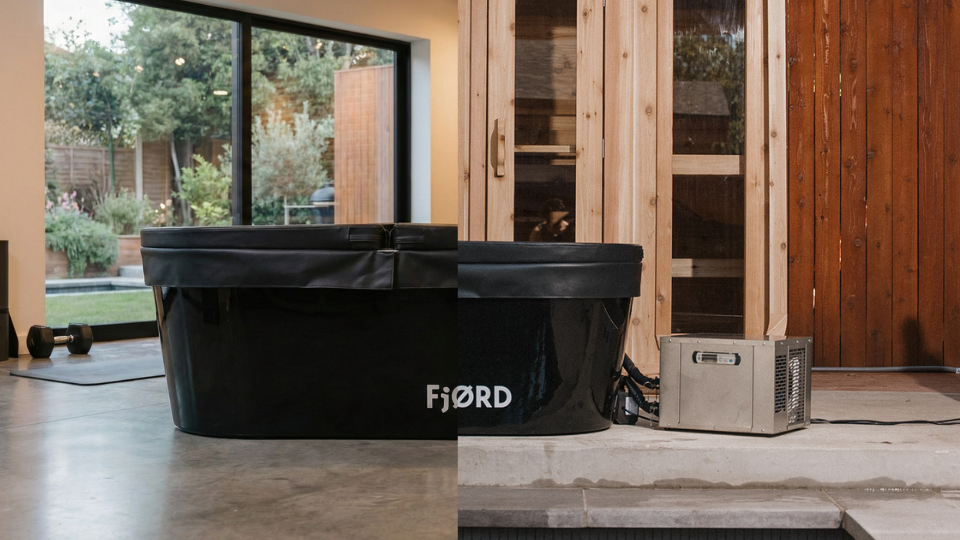
Designing a cold plunge setup is a bit like designing a small pool. You can make it beautiful on day one or a nightmare to live with over the next five years. The difference usually comes down to whether you planned the setup around how you will actually use it, or around how it looks in a photo.
At FjØRD Cold Plunge, we have walked hundreds of customers through this process. Whether you are installing a plunge in your garage, your backyard, a wellness studio, or a master bathroom, the same foundational questions apply. Get them right, and your cold plunge becomes the easiest part of your morning. Get them wrong, and even the best hardware in the world sits unused.
Below is everything we cover on a first FjØRD consult, broken into the three decisions that matter most: placement, plumbing, and maintenance.
Indoor vs Outdoor: Choosing the Right Placement for Your Cold Plunge
The first question we ask every customer is simple: where is this going? The answer shapes every other decision, from drainage to insulation to how often you will realistically use it. Both indoor and outdoor setups can work beautifully, but they come with different trade-offs that are worth understanding before you commit.
Indoor cold plunge setup
An indoor installation offers the best temperature stability. Your chiller does not have to fight ambient heat in the summer or freezing air in the winter, which means lower energy costs and more consistent water temperature year-round. The FjØRD Lux runs at roughly $13 to $17 per month in electricity under normal indoor conditions, a figure that can climb significantly with outdoor exposure to extreme heat.
However, indoor placement requires you to think through three things that people often overlook. First is drainage: you need a plan for where the water goes when you drain or splash. A floor drain is ideal, but if your space does not have one, a pump-out solution or routing a drain hose to a nearby bathtub or utility sink works well. Second is humidity: cold water in a warm room creates condensation, and over time that moisture can damage walls, flooring, and cabinetry if the space is not properly ventilated. An exhaust fan or dehumidifier solves this. Third is noise: chillers produce a low hum when running. In a garage or basement, this is a non-issue. In a bedroom or living area, you will want to plan the chiller placement so the sound does not disrupt your space.
Popular indoor locations include garages, basements, bathrooms with tile flooring, and dedicated wellness rooms. The key is a flat, stable surface that can support the weight of the tub filled with water (typically 1,000 to 2,000+ pounds depending on the model) and proximity to a dedicated GFCI electrical outlet.
Outdoor cold plunge setup
An outdoor cold plunge looks incredible. There is something deeply satisfying about stepping into cold water surrounded by your backyard, a patio, or a deck. Many of our customers in Austin, Texas and across the South love the outdoor setup because it turns the plunge into a full sensory experience.
But outdoor placement demands more from your equipment. Direct sunlight raises water temperature and forces the chiller to work harder, increasing energy costs. Wind, rain, dust, and debris can compromise water quality faster. And if you live in a climate with freezing winters, you need a plan to protect your plumbing lines and chiller from ice damage.
For outdoor setups, we recommend a shaded or partially covered location with good drainage away from the tub. A concrete pad, reinforced deck, or level paver surface provides the most stable foundation. The chiller should be positioned within three to eight feet of the basin with adequate airflow around the unit, and all plumbing connections should be insulated if you experience temperatures below freezing. The FjØRD Sport is a popular choice for outdoor use thanks to its drop-stitch construction and portability, giving you the flexibility to move or store the tub seasonally if needed.
If you are weighing both options, our Cold Plunge Buyer’s Guide walks through the 11 essential questions to ask before you buy, including climate, placement, and chiller capacity considerations.
Drainage and Plumbing: The Decisions That Determine Daily Usability
This is where most cold plunge setups either become effortless or become a headache. The plumbing is not complicated, but it needs to be planned before the tub arrives, not after.
Drainage options
Every FjØRD cold plunge includes a standard drain port that connects to a garden hose, giving you control over where the water goes. The question is: where will that water go in your specific space?
If you have a floor drain (common in garages, basements, and commercial spaces), you are in the best position. Simply route the drain hose to the floor drain and let gravity do the work. If you do not have a floor drain, the next best options are routing to a nearby bathtub, shower, utility sink, or directly outdoors to a lawn or garden area. For spaces without any of these options, a small submersible pump ($30 to $50) can push water out to a distant drain or outdoor area.
Permanent line vs. flexibility. Some customers prefer a permanent plumbing connection, especially in commercial settings or dedicated wellness rooms where the tub will never move. Others, particularly homeowners who may want to reposition the plunge seasonally or take it with them if they move, prefer the flexibility of a hose-based drain system. Both approaches work well with FjØRD systems. The key is deciding upfront so your space is built around the choice rather than forcing a workaround later.
Water supply
Filling your cold plunge is straightforward. For outdoor setups, a standard garden hose works perfectly. For indoor setups, a sink adapter or shower diverter lets you connect a hose to your existing plumbing. If you want the cleanest possible starting water, an inline hose filter removes chlorine, heavy metals, and sediment before the water ever hits the tub.
Electrical requirements
FjØRD cold plunges run on a standard 120V outlet. The critical requirement is that the outlet must be GFCI-protected (ground fault circuit interrupter) for safety around water, and ideally dedicated to the cold plunge alone. No extension cords. If you are unsure about your electrical setup, a quick consultation with a licensed electrician before installation day saves time and ensures code compliance.
Maintenance: The Habit That Keeps Your Habit Alive
A cold plunge that is always clean and always ready is a cold plunge that gets used. A cold plunge that requires 20 minutes of maintenance every time you want to step in is a cold plunge that collects dust. Maintenance is not glamorous, but it is the single biggest factor in whether your setup becomes a daily ritual or an expensive piece of furniture.
Filtration
FjØRD systems include an integrated filtration system that continuously circulates and cleans the water. The pre-filter catches larger debris, while the primary filter handles finer particles. We recommend checking the pre-filter weekly and replacing the primary filter every three to four weeks for residential use. In commercial settings with higher traffic, filters may need more frequent attention.
Water changes
For residential use, plan to drain and refill the tub every one to two months. For commercial use or high-traffic settings, weekly water changes are recommended unless you are running an ozone sanitation system, which can extend the interval significantly. The FjØRD Lux is ozone-ready, giving you the option to add ozone or UV sanitation for hands-off water quality management.
Chemical vs. ozone and UV sanitation
This is a personal preference question. Some customers are comfortable with light chemical treatment (a small amount of chlorine or bromine) to keep bacteria and algae in check. Others prefer a chemical-free approach using ozone generators, UV sterilizers, or a combination of both. Neither approach is wrong, but the decision should be made before you buy, since it affects which accessories and configurations you will need. If you have questions about which sanitation method is right for your setup, our team walks through this in every FjØRD consult.
Cover use
Always cover your cold plunge when it is not in use. This is the single easiest maintenance step, and it makes the biggest difference. A fitted cover keeps debris out, reduces evaporation, minimizes condensation (for indoor setups), and dramatically reduces the workload on your chiller by insulating the water surface. Every FjØRD system ships with an insulated cover designed for daily use.
The Two Biggest Cold Plunge Setup Mistakes
After working with hundreds of customers, I see the same two mistakes over and over again.
Mistake number one: buying the “coolest” unit without thinking about the reality of using it 300 days per year. The tub that looks best in an Instagram photo is not always the tub that works best in your life. What matters is whether the chiller holds temperature reliably, whether the filtration keeps the water clean with minimal effort, and whether the form factor fits your actual space. The FjØRD Lux was designed around this principle: American-made chiller, integrated filtration, Scandinavian aesthetics, and operating costs under $17 per month.
Mistake number two: building a beautiful space that is a maintenance headache. I have seen stunning cold plunge installations with no floor drain, no ventilation, and chillers crammed into corners with no airflow. Within six months, the owner stops using it because every session requires a cleanup operation. Design the space around the daily experience, not the other way around.
Design the Entire User Journey, Not Just the Tub
If you are considering a cold plunge installation, the best advice I can give you is this: sketch the entire user journey before you make a single purchase.
Start from the moment you walk into the space. Where do you change? Where do you put your towel? How do you step into the tub safely? Where does the water splash when you get in and out? What does the warm-up look like afterward? Is there a bench, a robe, a heater, or a sauna nearby? How do you handle the post-plunge drip on the way back inside? For those interested in contrast therapy (pairing a sauna with a cold plunge), the layout of the hot and cold elements relative to each other matters enormously for the flow of the ritual.
That is how we design FjØRD experiences that people actually use. Not just on day one, but on day 300. The FjØRD bundle builder lets you configure the exact combination of tub, chiller, and accessories for your space. And our team is available to help you plan your setup from the first sketch to the first plunge.
If you want to go deeper on the science behind why a consistent daily practice matters, explore our guides on designing your cold plunge protocol and cold water immersion for athletic recovery.
Explore the full FjØRD Cold Plunge lineup →
Cold Plunge Myths vs Facts: What the Science Actually Says
Home Cold Plunge vs. Gym or Spa: What Fits Your Lifestyle?